◯ Available 24/7 — Free Case Review ★★★★★ Google Rating
● Serving All of NYC & Long Island
Long Island: (631) 925-2650
Toll Free: (877) TINI-LAW

What to Do After a Car Accident in Manhattan: A Personal Injury Lawyer’s Guide
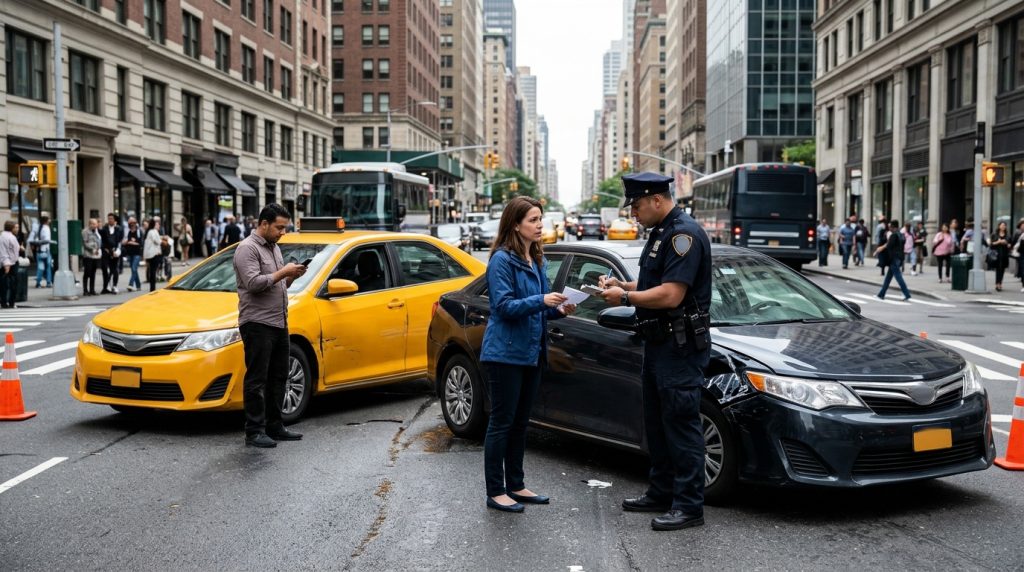
What to Do After a Car Accident in Manhattan: A Personal Injury Lawyer’s Guide

Car accidents in Manhattan occur with alarming frequency, often leaving victims uncertain about their legal rights and next steps. As experienced personal injury attorneys serving Manhattan, Brooklyn, Queens, The Bronx, Staten Island, and throughout Nassau and Suffolk Counties, we’ve guided countless clients through the critical hours and days following a collision. This comprehensive guide outlines the essential steps you must take to protect both your health and your legal interests.

Immediate Steps at the Accident Scene

Ensure Safety and Call 911

Your first priority following any car accident is safety. If you or anyone else has sustained injuries, call 911 immediately. Even if injuries seem minor, obtaining medical attention creates an official record that proves invaluable in personal injury claims. New York Vehicle and Traffic Law requires that accidents resulting in injury, death, or property damage exceeding $1,000 must be reported to the police.

Document Everything

If you’re physically able, documentation is crucial. Use your smartphone to photograph vehicle damage, street conditions, traffic signals, skid marks, and any visible injuries. Capture images from multiple angles and distances. In Manhattan’s congested streets, environmental factors like obstructed views, construction zones, or malfunctioning traffic lights may contribute to liability determinations.

Exchange information with all parties involved, including names, contact details, insurance information, license plate numbers, and driver’s license numbers. Collect contact information from witnesses—their statements can prove critical if disputes arise regarding fault.

Avoid Admitting Fault

While you should cooperate with law enforcement, avoid making statements that could be construed as admitting liability. Even apologizing can be interpreted as accepting responsibility. Stick to factual statements when speaking with police officers, other drivers, and insurance representatives. Remember that New York follows a “pure comparative negligence” rule, meaning your compensation can be reduced by your percentage of fault.

Critical Actions in the Days Following Your Accident

Seek Comprehensive Medical Evaluation

Many serious injuries, including whiplash, concussions, and internal injuries, may not manifest symptoms immediately. Visit a healthcare provider within 24-48 hours of your accident, even if you feel fine. This medical evaluation establishes a clear connection between the accident and any injuries, which insurance companies scrutinize closely.

Keep detailed records of all medical treatments, prescriptions, and related expenses. If your injuries prevent you from working, obtain documentation from your employer regarding lost wages.

Notify Your Insurance Company

New York is a “no-fault” insurance state, meaning you’ll initially file a claim with your own insurance company regardless of who caused the accident. You typically have 30 days to file a no-fault claim for medical expenses and lost wages up to your policy limits. However, be cautious when providing statements—insurance adjusters may use your words to minimize your claim’s value.

Preserve Evidence

Maintain all accident-related documentation in one location: police reports, medical records, insurance correspondence, repair estimates, and receipts for expenses. If your vehicle sustained damage, obtain multiple repair estimates before authorizing work. Take photographs of your vehicle’s condition before repairs begin.

Understanding Your Legal Rights in New York

While New York’s no-fault system covers basic economic losses, you may pursue a personal injury lawsuit against the at-fault driver if you’ve sustained a “serious injury” as defined by New York Insurance Law §5102(d). This includes significant disfigurement, bone fractures, permanent limitation of a body system or organ, or significant limitation of a body function or system.

The statute of limitations for personal injury claims in New York is generally three years from the accident date, though exceptions exist. Don’t delay in exploring your legal options, as evidence deteriorates and witness memories fade over time.

When Financial Concerns Arise

Serious accidents can create overwhelming financial pressures from mounting medical bills and lost income. If you’re facing financial hardship, understanding your options is essential. Our bankruptcy law practice can help if debt becomes unmanageable, though personal injury settlements may offer relief before considering that option.

Special Considerations for Manhattan Accidents

Manhattan presents unique accident scenarios. Collisions involving commercial vehicles, construction zones, or international visitors require specialized legal knowledge. If a construction site contributed to your accident, our construction law expertise may prove valuable in identifying additional liable parties.

Accidents involving drivers from other countries may raise complex jurisdictional issues that our international law team can address. Similarly, if you’re charged with a traffic violation following an accident, our criminal law attorneys can protect your rights.

Why Legal Representation Matters

Insurance companies employ experienced adjusters and attorneys whose goal is minimizing payouts. Without legal representation, you’re at a significant disadvantage when negotiating fair compensation for your injuries, lost wages, pain and suffering, and future medical needs.

An experienced personal injury attorney investigates your accident thoroughly, identifies all liable parties, calculates the true value of your claim, and negotiates aggressively with insurance companies. If settlement negotiations fail, we’re prepared to litigate your case through trial.

Take Action to Protect Your Rights

If you’ve been injured in a car accident in Manhattan, Brooklyn, Queens, The Bronx, Staten Island, Nassau County, or Suffolk County, don’t navigate this challenging process alone. At Tini Law, P.C., our personal injury team provides compassionate, results-driven representation to accident victims throughout New York.

Contact us today for a free consultation to discuss your case. We work on a contingency fee basis, meaning you pay no attorney fees unless we recover compensation for you. Visit our FAQ videos page for answers to common questions about personal injury claims, or call our office to speak directly with an experienced attorney who will fight for the compensation you deserve.


Construction Mechanic’s Liens in New York: How Contractors Can Protect Payment Rights

Construction Mechanic’s Liens in New York: How Contractors Can Protect Payment Rights

In the construction industry, payment disputes remain one of the most significant challenges contractors, subcontractors, and material suppliers face. When property owners or general contractors fail to pay for completed work or delivered materials, a mechanic’s lien provides a powerful legal remedy to secure payment rights. Understanding how to properly file and enforce a mechanic’s lien in New York is essential for protecting your business interests across Manhattan, Brooklyn, Queens, The Bronx, Staten Island, and throughout Nassau and Suffolk Counties.

What Is a Mechanic’s Lien in New York?

A mechanic’s lien is a security interest granted by New York Lien Law that allows contractors, subcontractors, laborers, and material suppliers to place a claim against real property when they haven’t been paid for their work or materials. This legal instrument creates a cloud on the property title, preventing the owner from selling or refinancing until the debt is resolved.

Under New York law, mechanic’s liens apply to various construction-related services, including general contracting, electrical work, plumbing, carpentry, architectural services, and material supply. The lien attaches to the property itself, making it one of the most effective collection tools available in construction law.

Who Can File a Mechanic’s Lien?

New York’s Lien Law grants mechanic’s lien rights to several parties involved in construction projects:

  • General contractors who contract directly with property owners
  • Subcontractors hired by general contractors
  • Material suppliers who provide construction materials
  • Laborers who perform work on the project
  • Design professionals including architects and engineers
  • Equipment rental companies that lease machinery for the project

Each category has specific requirements and deadlines that must be strictly followed to preserve lien rights.

Critical Deadlines for Filing Mechanic’s Liens in New York

Notice of Lending Requirements

Before filing a mechanic’s lien, subcontractors and material suppliers must serve a Notice of Lending on the property owner and general contractor. This preliminary notice must be served within a specific timeframe depending on the type of project—typically within 30 days of first furnishing labor or materials for residential projects.

Filing Deadlines

Timing is critical when filing a mechanic’s lien in New York. The deadline varies based on your role in the project:

  • Contractors with direct contracts: Must file within eight months of the last date of furnishing labor or materials
  • Subcontractors and suppliers: Must file within eight months of their last date of work or delivery

Missing these deadlines typically results in losing your lien rights permanently, making timely action essential for contractors working on projects throughout the New York metropolitan area.

The Mechanic’s Lien Filing Process

Step 1: Prepare the Notice of Lien

The Notice of Lien must include specific information required by New York Lien Law, including the property owner’s name, property description, labor or materials provided, amount owed, and dates of first and last work. Any errors or omissions can invalidate the lien.

Step 2: File with the County Clerk

The Notice of Lien must be filed with the County Clerk’s office where the property is located—whether that’s New York County (Manhattan), Kings County (Brooklyn), Queens County, Bronx County, Richmond County (Staten Island), Nassau County, or Suffolk County. Each county has specific filing procedures and fees.

Step 3: Serve the Property Owner

After filing, you must serve a copy of the filed lien on the property owner within a specified timeframe. Proper service is essential for the lien’s validity.

Enforcing Your Mechanic’s Lien

Filing a mechanic’s lien doesn’t automatically result in payment. To enforce the lien, you must commence a foreclosure action within one year of filing. This lawsuit seeks a court judgment allowing the property to be sold to satisfy the debt. Many property owners choose to settle rather than face foreclosure, making the lien an effective negotiation tool.

In some cases, payment disputes may intersect with other legal issues. If a property owner files for bankruptcy protection, your mechanic’s lien may be affected, requiring coordination between construction law and bankruptcy law strategies. Similarly, projects involving foreign investors or international entities may require expertise in international law.

Common Mistakes That Invalidate Mechanic’s Liens

Several errors can render your mechanic’s lien unenforceable:

  • Missing filing deadlines or preliminary notice requirements
  • Incorrect property descriptions or owner information
  • Overstating the amount owed
  • Failing to properly serve required parties
  • Not commencing foreclosure within one year

Given the technical nature of mechanic’s lien law and the serious consequences of errors, professional legal guidance is essential.

Alternatives and Related Remedies

While mechanic’s liens are powerful tools, they’re not the only option for unpaid contractors. Depending on the circumstances, you might also consider:

  • Bond claims on public projects where liens aren’t available
  • Breach of contract lawsuits
  • Stop work notices to halt construction until payment issues are resolved
  • Trust fund claims under New York Lien Law Article 3-A

In extreme cases involving fraudulent conduct, payment disputes might even involve criminal law issues related to larceny or fraud.

Protect Your Payment Rights with Experienced Legal Counsel

Mechanic’s liens are complex legal instruments with strict procedural requirements. Whether you’re a general contractor, subcontractor, or material supplier working on projects in Manhattan, Brooklyn, Queens, The Bronx, Staten Island, Nassau County, or Suffolk County, protecting your payment rights requires knowledgeable legal representation.

At Tini Law, P.C., our construction law team has extensive experience helping contractors file, enforce, and defend against mechanic’s liens throughout New York. We understand the financial impact of payment disputes and work diligently to secure the compensation you’ve earned.

Don’t wait until you’ve lost your lien rights. Contact Tini Law, P.C. today to discuss your payment dispute and explore your legal options. Visit our FAQ videos for more information about construction law issues, or call us to schedule a consultation with an experienced construction attorney who will fight to protect your business interests.

How to Fight a DUI Charge in Nassau County: Criminal Defense Strategies That Work

How to Fight a DUI Charge in Nassau County: Criminal Defense Strategies That Work

Facing a DUI charge in Nassau County can be overwhelming, with potential consequences including license suspension, substantial fines, and even jail time. However, a DUI arrest doesn’t automatically mean a conviction. With experienced criminal law representation and strategic defense tactics, many charges can be reduced or dismissed entirely.

Understanding DUI Charges in Nassau County

New York’s Vehicle and Traffic Law Section 1192 establishes several levels of impaired driving offenses. In Nassau County, prosecutors aggressively pursue these cases, making it essential to understand what you’re facing. A standard DUI charge requires proof that you operated a vehicle with a blood alcohol content (BAC) of 0.08% or higher, or while your ability to operate was impaired by alcohol or drugs.

Nassau County courts, including the First and Second District Courts, handle thousands of DUI cases annually. The jurisdiction where your arrest occurred—whether in Hempstead, Garden City, or elsewhere in Nassau County—can impact court procedures and potential outcomes.

Proven Criminal Defense Strategies for DUI Cases

Challenging the Traffic Stop

The Fourth Amendment protects against unreasonable searches and seizures. Law enforcement must have reasonable suspicion to initiate a traffic stop. If the officer lacked probable cause—such as a valid traffic violation or erratic driving behavior—any evidence obtained during the stop may be suppressed. This constitutional challenge can result in complete dismissal of charges.

Questioning Field Sobriety Test Administration

Field sobriety tests (FSTs) must follow standardized procedures established by the National Highway Traffic Safety Administration. Officers in Nassau County frequently administer the Horizontal Gaze Nystagmus, Walk-and-Turn, and One-Leg Stand tests. However, these tests are inherently subjective and can be affected by medical conditions, footwear, road conditions, and weather. An experienced criminal defense attorney can identify improper administration or alternative explanations for “failed” tests.

Challenging Breathalyzer and Chemical Test Results

Breathalyzer devices require regular calibration and maintenance. In Nassau County, these machines must meet strict certification standards. Your attorney can subpoena maintenance records, calibration logs, and officer training certifications. Additionally, certain medical conditions, including acid reflux and diabetes, can produce false positive results. Blood test results can be challenged based on improper storage, chain of custody issues, or contamination.

Establishing Rising Blood Alcohol Defense

Alcohol takes time to absorb into the bloodstream. The “rising BAC” defense argues that your blood alcohol level was below the legal limit while driving but rose above 0.08% by the time testing occurred. This defense is particularly effective when significant time elapsed between the traffic stop and chemical testing.

The Importance of Immediate Legal Action

Time is critical in DUI cases. You have only 15 days from your arrest to request a DMV hearing to challenge your license suspension. Missing this deadline results in automatic suspension. Additionally, evidence can deteriorate, witnesses’ memories fade, and surveillance footage may be deleted. Securing legal representation immediately after your arrest ensures preservation of crucial evidence.

Beyond DUI matters, if your case involves related issues such as property concerns or business implications, our firm also handles construction law, international law, and bankruptcy law matters that may arise from criminal charges affecting your livelihood.

Potential Outcomes and Plea Negotiations

Not every DUI case proceeds to trial. Skilled criminal defense attorneys negotiate with Nassau County prosecutors to secure favorable outcomes. Depending on your circumstances and criminal history, charges may be reduced to Driving While Ability Impaired (DWAI), which carries lesser penalties. First-time offenders may qualify for diversion programs or conditional discharge agreements.

For cases that do proceed to trial, the prosecution bears the burden of proving guilt beyond a reasonable doubt. A comprehensive defense strategy that challenges the evidence, cross-examines witnesses effectively, and presents alternative explanations can result in acquittal.

Serving Nassau County and Throughout New York

Tini Law, P.C. represents clients throughout Nassau County, Suffolk County, and the five boroughs including Manhattan, Brooklyn, Queens, The Bronx, and Staten Island. Our criminal defense team understands the nuances of local courts and maintains relationships with prosecutors and judges throughout the region.

For additional information about criminal defense procedures and your rights, visit our FAQ videos page, where we address common questions about DUI charges and criminal proceedings.

Take Action to Protect Your Rights

A DUI charge in Nassau County requires immediate, aggressive defense. The consequences of conviction extend beyond criminal penalties—affecting employment, professional licenses, insurance rates, and personal reputation. Don’t face these charges alone.

Contact Tini Law, P.C. today for a confidential consultation. Our experienced criminal defense attorneys will evaluate your case, explain your options, and develop a strategic defense tailored to your specific circumstances. Call us now to begin protecting your future.

Wrongful Death Claims in New York: Who Can File and What Damages Are Available?

Wrongful Death Claims in New York: Who Can File and What Damages Are Available?

Losing a loved one due to someone else’s negligence or intentional act is devastating. When such a tragedy occurs in New York, the legal system provides a mechanism for surviving family members to seek justice through a wrongful death claim. Understanding who has the legal standing to file and what compensation may be available is crucial for families navigating this difficult time.

Understanding Wrongful Death Claims Under New York Law

New York’s wrongful death statute, codified in EPTL § 5-4.1, establishes a framework distinctly different from personal injury claims. Unlike other states where multiple family members may file independently, New York law designates a single representative to pursue the claim on behalf of all beneficiaries. This centralized approach ensures consistent legal proceedings while protecting the interests of all eligible parties.

Wrongful death claims can arise from various circumstances, including medical malpractice, motor vehicle accidents, workplace incidents—particularly in construction law cases where dangerous site conditions exist—defective products, and even criminal acts. Throughout Manhattan, Brooklyn, Queens, The Bronx, Staten Island, and Nassau and Suffolk Counties, families face these tragic situations and need experienced legal guidance.

Who Has Legal Standing to File a Wrongful Death Claim in New York?

New York law is restrictive regarding who may initiate a wrongful death action. Only the personal representative of the decedent’s estate possesses the legal authority to file the claim. This representative is typically:

  • The executor or administrator named in the decedent’s will
  • An administrator appointed by the Surrogate’s Court if no will exists
  • A surviving spouse who has been appointed as the estate representative

The personal representative files the lawsuit not for their own benefit, but on behalf of the decedent’s distributees—those individuals entitled to inherit under New York’s intestacy laws. These typically include the surviving spouse, children, parents, and in some cases, more distant relatives if no closer family members survive.

Who Are the Beneficiaries?

While only the estate representative can file, the beneficiaries who ultimately receive compensation are determined by New York’s Estates, Powers and Trusts Law. The hierarchy generally follows this order:

  1. Surviving spouse and children
  2. Parents (if no spouse or children survive)
  3. Siblings and more distant relatives (in rare circumstances)

This structure occasionally creates complications, particularly in cases involving international law considerations where family members reside abroad or citizenship questions arise regarding inheritance rights.

What Damages Are Available in New York Wrongful Death Cases?

New York’s approach to wrongful death damages focuses on the economic losses suffered by the distributees rather than the decedent’s pain and suffering. This is a critical distinction that often surprises families unfamiliar with the state’s legal framework.

Economic Damages

Compensable economic damages include:

  • Loss of financial support: The income and benefits the deceased would have provided to dependents
  • Loss of services: The value of household services, childcare, and guidance the deceased provided
  • Medical and funeral expenses: Costs incurred due to the fatal injury
  • Loss of inheritance: The assets the deceased would have accumulated and passed to heirs

Non-Economic Damages

New York law does not permit recovery for the decedent’s pre-death pain and suffering in a wrongful death action. However, if the decedent survived for any period after the injury, the estate may file a separate survival action under EPTL § 11-3.2 to recover these damages, which then become part of the estate.

Beneficiaries cannot recover for their own grief, emotional distress, or loss of companionship in the wrongful death action itself—another significant limitation under New York law.

Important Time Limitations and Procedural Considerations

New York imposes a two-year statute of limitations for wrongful death claims, beginning from the date of death. Missing this deadline typically results in permanent loss of the right to compensation. Additionally, estate administration must be initiated through Surrogate’s Court before filing the wrongful death action.

These procedural requirements can become complex, particularly when estate issues intersect with other legal matters such as bankruptcy proceedings or disputes over asset distribution. Coordinating multiple legal proceedings requires sophisticated legal knowledge and strategic planning.

Contact Tini Law, P.C. for Experienced Wrongful Death Representation

If you’ve lost a loved one due to another party’s negligence or wrongful conduct in Manhattan, Brooklyn, Queens, The Bronx, Staten Island, Nassau County, or Suffolk County, Tini Law, P.C. provides compassionate yet aggressive representation in wrongful death matters. Our experienced personal injury attorneys understand both the legal complexities and the emotional challenges families face during this difficult time.

We handle all aspects of wrongful death claims, from estate administration coordination to maximizing compensation for beneficiaries. For answers to common questions about the legal process, visit our FAQ videos page, or contact us today for a confidential consultation to discuss your family’s specific situation and legal options.

Construction Mechanic’s Liens in New York: How Contractors Can Protect Payment Rights

Construction Mechanic’s Liens in New York: How Contractors Can Protect Payment Rights

For contractors, subcontractors, and suppliers working on construction projects throughout New York, unpaid invoices represent one of the most significant business risks. Fortunately, New York Lien Law provides a powerful legal remedy: the mechanic’s lien. Understanding how to properly file and enforce these liens can mean the difference between recovering payment and absorbing substantial financial losses.

What Is a Mechanic’s Lien in New York?

A mechanic’s lien is a security interest granted by statute that allows contractors, subcontractors, material suppliers, and laborers to place a claim against real property when they haven’t been paid for work performed or materials provided. This legal mechanism ensures that those who improve property have recourse when property owners or general contractors fail to fulfill their payment obligations.

In New York, mechanic’s liens are governed by Article 2 of the Lien Law, which establishes strict requirements and deadlines that must be followed to preserve lien rights. Projects across Manhattan, Brooklyn, Queens, The Bronx, Staten Island, Nassau County, and Suffolk County all fall under these same statutory requirements, making it essential for contractors to understand the process regardless of where they work.

Who Can File a Mechanic’s Lien in New York?

New York law extends lien rights to various parties involved in construction projects, including:

  • General contractors who contract directly with property owners
  • Subcontractors hired by general contractors
  • Material suppliers who provide building materials
  • Equipment lessors who rent machinery for construction use
  • Laborers who perform work on the property
  • Architects and engineers who provide design services

Each category of lienor has specific notice requirements and deadlines that must be strictly observed to maintain valid lien rights.

Critical Deadlines for Filing Mechanic’s Liens

Notice of Lending Requirements

Before filing a mechanic’s lien, subcontractors and suppliers must typically serve a Notice of Lending on the property owner and general contractor. This preliminary notice must be served within a specific timeframe—generally before starting work or within 30 days of first furnishing labor or materials. Failure to serve this notice can result in the complete loss of lien rights for subcontractors and suppliers.

Filing the Mechanic’s Lien

The deadline for filing a mechanic’s lien depends on the type of project:

  • Residential properties: Eight months from the last date of furnishing labor or materials
  • Commercial and public improvement projects: Generally eight months, though specific circumstances may alter this deadline

The lien must be filed in the county clerk’s office where the property is located. For projects spanning multiple boroughs or counties, careful attention must be paid to filing in the correct jurisdiction.

Foreclosure Action Deadline

Filing a mechanic’s lien is only the first step. To enforce the lien, you must commence a foreclosure action within one year of filing the lien. Missing this deadline renders the lien unenforceable, eliminating your secured claim against the property.

Common Challenges in Mechanic’s Lien Cases

Construction payment disputes often involve complex legal issues beyond simple lien filing. Property owners may file for bankruptcy protection, which triggers automatic stay provisions that can complicate lien enforcement. Understanding the intersection of construction law and bankruptcy law becomes critical in these situations.

Additionally, projects involving international developers or foreign-owned entities may present unique jurisdictional challenges requiring expertise in international law. When disputes escalate to litigation, understanding your rights and having experienced legal representation becomes essential.

Protecting Your Payment Rights: Best Practices

To maximize your chances of recovering unpaid amounts, contractors should:

  • Maintain detailed records: Document all work performed, materials supplied, and dates of service
  • Serve timely notices: Don’t wait until payment problems arise to serve required preliminary notices
  • Review contracts carefully: Understand lien waiver provisions and payment terms before signing
  • Monitor payment schedules: Address payment delays immediately rather than allowing them to accumulate
  • Consult legal counsel early: Seeking advice before problems escalate can prevent costly mistakes

It’s also important to understand that payment disputes can sometimes involve allegations of fraud or other issues that may implicate criminal law considerations, making experienced legal guidance even more valuable.

Protect Your Business with Experienced Construction Law Representation

Mechanic’s liens represent a powerful tool for contractors seeking payment, but the technical requirements and strict deadlines make professional legal assistance invaluable. Whether you’re facing a payment dispute on a residential renovation in Queens or a major commercial development in Manhattan, having an attorney who understands New York’s complex lien law can protect your financial interests.

At Tini Law, P.C., we provide comprehensive construction law representation to contractors, subcontractors, and suppliers throughout New York’s five boroughs and Long Island. Our team understands the challenges construction professionals face and works diligently to secure the payments you’ve earned.

Don’t let unpaid invoices threaten your business. Contact Tini Law, P.C. today to discuss your mechanic’s lien rights and payment recovery options. Visit our FAQ videos for more information about construction law issues, or call us to schedule a consultation with an experienced construction attorney.

Wrongful Death Claims in New York: Who Can File and What Damages Are Available?

Wrongful Death Claims in New York: Who Can File and What Damages Are Available?

Losing a loved one due to someone else’s negligence or wrongful act is devastating. In New York, wrongful death claims provide a legal avenue for families to seek justice and financial compensation. Understanding who can file these claims and what damages are recoverable is crucial for families navigating this difficult time across Manhattan, Brooklyn, Queens, The Bronx, Staten Island, Nassau County, and Suffolk County.

Understanding Wrongful Death Claims Under New York Law

New York’s wrongful death statute, codified in EPTL § 5-4.1, allows designated representatives to pursue compensation when a person dies due to another party’s wrongful conduct. These claims can arise from various circumstances, including medical malpractice, motor vehicle accidents, workplace incidents, construction accidents, or even criminal acts.

The claim seeks to compensate the decedent’s estate and surviving family members for losses resulting from the untimely death. Unlike personal injury claims where the injured party files directly, wrongful death actions have specific requirements regarding who may initiate the lawsuit.

Who Has Legal Standing to File a Wrongful Death Claim?

New York law strictly limits who can file a wrongful death lawsuit. Unlike some jurisdictions that permit various family members to file independently, New York designates a single representative to pursue the claim on behalf of all beneficiaries.

The Personal Representative

Only the personal representative (executor or administrator) of the decedent’s estate can file a wrongful death claim in New York. This representative is typically appointed through the Surrogate’s Court and acts on behalf of all distributees—those who would inherit under New York’s intestacy laws or the decedent’s will.

If the decedent had a will, the named executor generally serves as the personal representative. Without a will, the Surrogate’s Court appoints an administrator, usually prioritizing the surviving spouse, then adult children, and other close relatives.

Who Are the Beneficiaries?

While only the personal representative can file the claim, the damages recovered benefit the decedent’s distributees. Under New York law, these typically include:

  • Surviving spouse
  • Children (biological and adopted)
  • Parents (if no spouse or children survive)
  • Siblings and other next of kin (in limited circumstances)

The court distributes the settlement or award according to New York’s intestacy statutes, regardless of who may have been emotionally closest to the deceased.

What Damages Are Available in New York Wrongful Death Cases?

New York’s wrongful death statute permits recovery of specific economic damages. Understanding these categories is essential for families throughout Manhattan, Brooklyn, Queens, The Bronx, Staten Island, Nassau County, and Suffolk County.

Economic Losses

Wrongful death damages primarily focus on the financial losses suffered by the distributees:

  • Lost earnings and benefits: The present value of income the deceased would have earned during their expected lifetime
  • Loss of inheritance: The value of the estate that would have been accumulated had the decedent lived
  • Lost parental guidance: For minor children who have lost a parent
  • Medical and funeral expenses: Costs incurred due to the fatal injury and burial

Limitations on Non-Economic Damages

Notably, New York’s wrongful death statute does not permit recovery for the decedent’s pain and suffering before death, nor does it allow compensation for the family’s grief or loss of companionship. However, if the decedent survived for any period after the injury, a separate survival action under EPTL § 11-3.2 may allow recovery for the decedent’s pre-death pain and suffering.

Punitive Damages

In cases involving particularly egregious conduct, punitive damages may be available to punish the defendant and deter similar behavior. These are awarded in addition to compensatory damages in appropriate circumstances.

Time Limitations for Filing Wrongful Death Claims

New York imposes a two-year statute of limitations for wrongful death claims, typically running from the date of death. Missing this deadline generally bars recovery permanently, making prompt legal consultation essential.

Certain circumstances may extend or shorten this period, and exceptions exist for cases involving municipal defendants or other special situations. For questions about specific timelines, our FAQ videos provide additional guidance on common legal concerns.

Complex Cases Requiring Specialized Legal Guidance

Some wrongful death cases involve additional complexities. International cases where the death occurred abroad or involves foreign nationals may require expertise in international law. If the decedent’s estate faces insolvency issues, bankruptcy law considerations may affect the claim’s administration.

Contact Tini Law, P.C. for Experienced Wrongful Death Representation

Navigating wrongful death claims requires experienced legal counsel who understands New York’s complex statutory framework. At Tini Law, P.C., we provide compassionate yet aggressive representation to families throughout Manhattan, Brooklyn, Queens, The Bronx, Staten Island, Nassau County, and Suffolk County.

Our personal injury team has extensive experience handling wrongful death claims and will fight to secure maximum compensation for your family’s losses. Contact Tini Law, P.C. today for a confidential consultation to discuss your case and learn how we can help you pursue justice for your loved one.

Contested vs Uncontested Divorce in NYC: Which Costs Less and Moves Faster?

Contested vs Uncontested Divorce in NYC: Which Costs Less and Moves Faster?

When facing the difficult decision to end a marriage, one of the most pressing questions New York couples ask is whether their divorce will be contested or uncontested. This distinction significantly impacts both the cost and timeline of your divorce proceedings. Understanding the differences can help you make informed decisions during this challenging time.

Understanding Uncontested Divorce in New York

An uncontested divorce occurs when both spouses agree on all major issues, including property division, spousal support, child custody, and child support. This cooperative approach represents the most streamlined path to dissolving a marriage in Manhattan, Brooklyn, Queens, The Bronx, Staten Island, and throughout Nassau and Suffolk Counties.

Cost of Uncontested Divorce

Uncontested divorces are significantly more affordable than their contested counterparts. Without extensive litigation, discovery processes, or multiple court appearances, legal fees remain substantially lower. Most uncontested divorces in NYC range from $1,500 to $5,000 in attorney fees, depending on the complexity of assets and whether international law considerations apply, such as foreign assets or overseas custody arrangements.

Timeline for Uncontested Divorce

Speed is another major advantage of uncontested divorce. Once all agreements are finalized and paperwork is filed, an uncontested divorce in New York typically takes three to six months to complete. The mandatory waiting period and court processing time account for most of this duration, rather than adversarial proceedings.

What Makes a Divorce Contested?

A contested divorce arises when spouses cannot agree on one or more critical issues. Common disputes include equitable distribution of marital property, business valuations requiring construction law or real estate expertise, spousal maintenance amounts, child custody arrangements, or parenting time schedules.

Financial Impact of Contested Divorce

Contested divorces carry substantially higher costs due to extensive legal work. Attorney fees for contested divorces in New York City typically range from $15,000 to $50,000 or more per spouse, depending on case complexity. Additional expenses include expert witness fees, forensic accountants, child custody evaluators, and court costs. Cases involving criminal law matters, such as domestic violence orders of protection, may require additional legal resources.

How Long Does a Contested Divorce Take?

Contested divorces in NYC can take anywhere from one to three years or longer. The timeline depends on court scheduling, discovery complexity, motion practice, and whether the case proceeds to trial. Multiple court appearances, depositions, and settlement conferences extend the process considerably.

Can a Contested Divorce Become Uncontested?

Absolutely. Many divorces that begin as contested eventually become uncontested through negotiation, mediation, or collaborative law approaches. Experienced divorce attorneys work diligently to reach settlements that avoid costly litigation while protecting their clients’ interests. This transition can save both time and money while reducing emotional stress.

Financial Considerations Beyond Divorce

Divorce often triggers additional financial concerns. Some clients facing divorce may also need to consider bankruptcy law options if marital debt becomes unmanageable. Understanding how divorce and bankruptcy intersect is crucial for protecting your financial future.

Key Factors That Influence Your Divorce Path

Several factors determine whether your divorce will be contested or uncontested:

  • Communication level: Can you and your spouse discuss issues productively?
  • Asset complexity: Do you own businesses, multiple properties, or international assets?
  • Child custody disputes: Can you agree on parenting arrangements?
  • Trust and transparency: Are both parties willing to disclose all financial information?
  • Emotional readiness: Are both spouses prepared to compromise?

Making the Right Choice for Your Situation

While uncontested divorce offers clear advantages in cost and speed, it’s not always possible or appropriate. If you’re facing domestic violence, suspect hidden assets, or have significant disagreements about child custody, a contested divorce may be necessary to protect your rights and interests.

For more insights into divorce proceedings and other legal matters, visit our FAQ videos page, where we address common questions about family law and other practice areas.

Get Expert Guidance for Your NYC Divorce

Whether you’re pursuing an uncontested divorce or facing contested proceedings, having experienced legal representation makes all the difference. At Tini Law, P.C., we serve clients throughout Manhattan, Brooklyn, Queens, The Bronx, Staten Island, Nassau County, and Suffolk County with comprehensive divorce and family law services.

Don’t navigate this challenging time alone. Contact Tini Law, P.C. today for a confidential consultation. Our experienced attorneys will evaluate your unique situation, explain your options, and develop a strategic approach that protects your interests while minimizing costs and stress. Call us now to take the first step toward your new beginning.

Construction Mechanic’s Liens in New York: How Contractors Can Protect Payment Rights

Construction Mechanic’s Liens in New York: How Contractors Can Protect Payment Rights

For contractors, subcontractors, and material suppliers working on construction projects across New York, few legal tools are as powerful as the mechanic’s lien. This statutory remedy provides critical protection when property owners or general contractors fail to pay for labor or materials provided. Understanding how to properly file and enforce a mechanic’s lien in New York can mean the difference between recovering payment and absorbing substantial financial losses.

What Is a Mechanic’s Lien?

A mechanic’s lien (also called a construction lien) is a security interest in real property that secures payment for work performed or materials supplied to improve that property. Under New York Lien Law, contractors who enhance the value of real estate through their labor or materials have a statutory right to file a lien against the property itself, creating a cloud on the title that must be resolved before the property can be sold or refinanced.

This powerful remedy applies to projects throughout Manhattan, Brooklyn, Queens, The Bronx, Staten Island, Nassau County, and Suffolk County, providing a uniform framework for payment protection across the state’s diverse construction markets.

Who Can File a Mechanic’s Lien in New York?

New York’s lien law extends protection to various parties in the construction chain, including:

  • General contractors who contract directly with property owners
  • Subcontractors hired by general contractors
  • Material suppliers who provide building materials
  • Equipment lessors who rent machinery or tools
  • Architects and engineers who provide design services

Each category of lienor has specific filing requirements and deadlines that must be strictly followed to preserve lien rights.

Critical Deadlines for Filing a Mechanic’s Lien

Notice of Lending Institution

Within 30 days of first furnishing labor or materials, contractors must serve a Notice of Lending Institution on the property owner. This notice requests information about any construction loan and the lending institution, allowing the contractor to protect their rights against the lender’s interest.

Notice of Mechanic’s Lien

The actual lien must be filed within eight months of the last date labor or materials were furnished. This deadline is strictly enforced—missing it by even one day can result in complete loss of lien rights. The Notice of Mechanic’s Lien must be filed with the county clerk in the county where the property is located and properly served on the property owner.

Foreclosure Action

Filing the lien is only the first step. To enforce the lien, you must commence a foreclosure action within one year of filing the Notice of Mechanic’s Lien. Failure to timely commence this action renders the lien void and unenforceable.

Essential Information Required in a Mechanic’s Lien

A valid mechanic’s lien in New York must contain specific information, including:

  • The name and address of the property owner
  • The name and address of the person who contracted for the work
  • The labor performed or materials furnished
  • The agreed price or reasonable value
  • The amount unpaid and claimed as a lien
  • A description of the property sufficient for identification
  • A verification by the lienor

Technical defects in the lien filing can provide grounds for dismissal, making professional legal guidance essential. Our construction law practice ensures all documentation meets New York’s exacting standards.

Common Challenges and Defenses

Property owners and general contractors frequently challenge mechanic’s liens on various grounds, including:

  • Timeliness defects: Arguments that notices were not served or filed within statutory deadlines
  • Waiver: Claims that the contractor waived lien rights through contract provisions or signed releases
  • Payment bond: Assertion that a payment bond covers the project, requiring a bond claim instead
  • Substantial completion: Disputes over when work was actually completed for deadline calculation purposes

In some cases, property owners facing financial distress may file for bankruptcy protection, which triggers an automatic stay that can complicate lien enforcement. Understanding the intersection of bankruptcy law and construction liens is crucial for protecting your interests.

Best Practices for Protecting Payment Rights

Document Everything

Maintain detailed records of all work performed, materials supplied, dates of service, and communications with property owners and general contractors. Photograph your work progress and keep signed delivery receipts.

Serve All Required Notices

Don’t wait until payment problems arise. Serve preliminary notices immediately upon starting work to preserve all available remedies.

Review Contracts Carefully

Many construction contracts contain provisions that limit or waive lien rights. Have an attorney review contracts before signing, particularly for projects involving international developers or foreign entities, where international law considerations may apply.

Act Quickly on Payment Disputes

The moment payment issues arise, consult with legal counsel. The short deadlines in New York’s lien law leave little room for delay.

When Criminal Issues Arise

In extreme cases, failure to pay contractors may involve criminal conduct, such as contractor fraud or larceny. If you suspect intentional fraud or theft of services, our criminal law attorneys can advise you on reporting obligations and potential criminal remedies that complement civil lien enforcement.

Protect Your Payment Rights with Experienced Legal Counsel

Construction mechanic’s liens are powerful tools, but they require precise execution and strict adherence to statutory requirements. A single missed deadline or technical error can eliminate your ability to recover payment for thousands or even millions of dollars in work.

At Tini Law, P.C., our construction law attorneys have extensive experience helping contractors, subcontractors, and suppliers throughout New York protect their payment rights through mechanic’s liens and other remedies. We handle every aspect of lien filing, enforcement, and foreclosure, ensuring your interests are fully protected.

Whether you’re facing a payment dispute on a residential project in Queens, a commercial development in Manhattan, or a large-scale construction project in Nassau or Suffolk County, we provide the strategic guidance you need. Visit our FAQ videos for additional insights on construction law topics, or contact us today for a consultation to discuss your specific situation.

Don’t let unpaid invoices threaten your business. Contact Tini Law, P.C. at (212) 729-7118 to speak with an experienced construction attorney about protecting your payment rights through mechanic’s liens and other legal remedies.

How Long Does a Personal Injury Case Take in Manhattan Courts?

How Long Does a Personal Injury Case Take in Manhattan Courts?

If you’ve been injured in an accident in Manhattan, one of the first questions you’re likely asking is: “How long will my personal injury case take?” The timeline for resolving a personal injury claim in New York City courts varies significantly depending on multiple factors, from case complexity to court congestion. Understanding what influences these timelines can help you set realistic expectations as you pursue compensation for your injuries.

Average Timeline for Personal Injury Cases in Manhattan

Personal injury cases in Manhattan typically take anywhere from several months to several years to resolve. While some straightforward cases may settle within 6-12 months, more complex litigation involving severe injuries or disputed liability can extend beyond two years. Manhattan’s Supreme Court, which handles personal injury cases, experiences significant caseload volume across all five boroughs—Manhattan, Brooklyn, Queens, The Bronx, and Staten Island—which can impact scheduling and resolution times.

The New York court system processes thousands of personal injury claims annually, and Manhattan courts specifically face unique challenges due to the dense population and high volume of accidents involving pedestrians, construction workers, and motor vehicle collisions.

Factors That Influence Your Case Timeline

Severity and Complexity of Injuries

Cases involving catastrophic injuries, permanent disability, or wrongful death naturally require more time to develop. Medical treatment must reach maximum medical improvement before accurately assessing damages, which can take months or even years. Your attorney needs complete medical documentation to present the full extent of your injuries and future care needs.

Liability Disputes

When fault is clear and undisputed, cases typically resolve faster. However, when the defendant contests liability or multiple parties share responsibility, extensive investigation and potentially expert testimony become necessary. Construction accidents, for example, often involve multiple liable parties, requiring thorough analysis similar to what you’d see in construction law matters.

Insurance Company Negotiations

Insurance carriers have their own timelines and strategies. Some insurers engage in good-faith negotiations promptly, while others employ delay tactics hoping claimants will accept lower settlements. Experienced personal injury attorneys understand these strategies and know when to push for trial rather than accept inadequate offers.

Court Congestion and Scheduling

Manhattan courts handle enormous caseloads. Getting a trial date can take 18-24 months or longer from the filing date. Motion practice, discovery disputes, and continuances can extend timelines further. Cases in Nassau County and Suffolk County may move at different paces depending on their respective court calendars.

The Personal Injury Case Process Timeline

Initial Investigation and Filing (1-6 Months)

Your attorney will investigate the accident, gather evidence, obtain medical records, and assess damages before filing a complaint. In New York, the statute of limitations for most personal injury cases is three years from the accident date, though certain exceptions apply.

Discovery Phase (6-18 Months)

Once litigation begins, both sides exchange information through interrogatories, document requests, and depositions. This phase can be lengthy, especially in cases involving multiple defendants or complex medical issues. The discovery process shares similarities with other civil litigation areas, including criminal law proceedings, though the standards differ significantly.

Mediation and Settlement Negotiations (Ongoing)

Settlement discussions can occur at any point. Many Manhattan courts require mediation before trial. A skilled negotiator can often secure favorable settlements without the uncertainty and expense of trial.

Trial (1-2 Weeks)

If settlement isn’t reached, your case proceeds to trial. Personal injury trials in Manhattan typically last several days to two weeks, depending on complexity. Post-trial motions and potential appeals can add additional months or years.

How to Potentially Expedite Your Case

While you cannot control court schedules, certain actions can help move your case forward efficiently:

  • Respond promptly to your attorney’s requests for information and documentation
  • Attend all medical appointments and follow treatment recommendations
  • Keep detailed records of expenses, lost wages, and how injuries affect your daily life
  • Be available for depositions and court appearances as scheduled
  • Consider reasonable settlement offers when appropriate

For additional insights into legal processes and timelines, our FAQ videos address common questions clients have throughout their cases.

When Financial Pressures Mount During Your Case

The extended timeline of personal injury litigation can create financial hardship, especially when injuries prevent you from working. If mounting medical bills and lost income become overwhelming, you may need to explore options like bankruptcy law protections, though this should be carefully coordinated with your personal injury claim to protect your potential recovery.

Contact Tini Law, P.C. for Experienced Personal Injury Representation

At Tini Law, P.C., we understand the frustration of waiting for your case to resolve while dealing with injuries, medical bills, and lost income. Our experienced personal injury attorneys serve clients throughout Manhattan, Brooklyn, Queens, The Bronx, Staten Island, Nassau County, and Suffolk County, providing aggressive representation while keeping you informed every step of the way.

We handle all aspects of personal injury litigation, and our diverse practice areas—including international law for cases involving foreign nationals—allow us to address complex legal situations comprehensively.

Don’t wait to protect your rights. Contact Tini Law, P.C. today for a consultation to discuss your personal injury case and learn how we can help you pursue the compensation you deserve.

How to Fight a DUI Charge in Nassau County: Criminal Defense Strategies That Work

How to Fight a DUI Charge in Nassau County: Criminal Defense Strategies That Work

Facing a DUI charge in Nassau County can be overwhelming, with potentially life-altering consequences including license suspension, hefty fines, and even incarceration. However, understanding your rights and implementing effective criminal defense strategies can significantly impact the outcome of your case. At Tini Law, P.C., our experienced criminal defense attorneys have successfully defended clients throughout Nassau County, Suffolk County, and the greater New York metropolitan area.

Understanding DUI Charges in Nassau County

New York State operates under strict driving while intoxicated (DWI) laws, which Nassau County law enforcement rigorously enforces. A DUI charge typically results from a blood alcohol content (BAC) of 0.08% or higher, though commercial drivers and those under 21 face even stricter thresholds. The prosecution must prove beyond a reasonable doubt that you were operating a vehicle while impaired, creating opportunities for strategic defense.

The Stakes: Why Proper Defense Matters

A DUI conviction carries serious ramifications that extend far beyond the courtroom. You may face license revocation, mandatory ignition interlock device installation, increased insurance premiums, and potential employment consequences. For professionals requiring security clearances or commercial licenses, the implications can be career-ending. This is why retaining experienced criminal law representation immediately after arrest is crucial.

Proven Defense Strategies for Nassau County DUI Cases

Challenging the Traffic Stop

The Fourth Amendment protects citizens from unreasonable searches and seizures. Law enforcement must have reasonable suspicion to initiate a traffic stop. If the officer lacked legitimate grounds—such as a traffic violation or observable erratic driving—the entire case may be subject to dismissal. Our attorneys meticulously examine police reports, dash cam footage, and witness statements to identify constitutional violations.

Questioning Field Sobriety Test Administration

Field sobriety tests (FSTs) are notoriously subjective and prone to error. The National Highway Traffic Safety Administration (NHTSA) has established standardized protocols for administering these tests. Many factors unrelated to intoxication—including medical conditions, footwear, road conditions, and nervousness—can affect performance. We scrutinize whether officers properly administered tests and consider alternative explanations for poor performance.

Challenging Breathalyzer and Chemical Test Results

Breathalyzer devices require regular calibration and proper maintenance. Testing procedures must follow strict protocols, and the machines themselves have known margin-of-error rates. Additionally, certain medical conditions, dietary factors, and environmental contaminants can produce false positive readings. Our legal team investigates maintenance records, calibration logs, and officer training certifications to identify procedural deficiencies.

Examining Chain of Custody for Blood Tests

When blood tests are involved, prosecutors must establish an unbroken chain of custody from collection through laboratory analysis. Any gaps in documentation or improper handling can compromise sample integrity. We examine whether proper procedures were followed at each stage and whether the testing facility maintains appropriate accreditation.

Building Your Defense in Nassau County Courts

Nassau County’s court system processes thousands of DUI cases annually. Familiarity with local procedures, prosecutors, and judges provides significant strategic advantages. Our attorneys have established relationships within the Nassau County legal community, enabling us to navigate the system effectively on your behalf.

Negotiating Favorable Plea Agreements

When appropriate, experienced counsel can negotiate reduced charges or alternative sentencing arrangements. Depending on case circumstances, prosecutors may agree to reduce DWI charges to DWAI (Driving While Ability Impaired), which carries lesser penalties. These negotiations require thorough case preparation and credible defense theories that demonstrate prosecutorial weaknesses.

Preparing for Trial

If negotiation proves unsuccessful, we prepare aggressively for trial. This includes deposing witnesses, retaining expert witnesses to challenge scientific evidence, and developing compelling narratives that create reasonable doubt. Our litigation experience extends beyond criminal defense to construction law, international law, and even bankruptcy law, providing diverse legal perspectives that strengthen defense strategies.

Why Choose Tini Law, P.C. for Your Nassau County DUI Defense

Our firm serves clients throughout Nassau County, Manhattan, Brooklyn, Queens, The Bronx, Staten Island, and Suffolk County. We understand that criminal charges affect every aspect of your life, which is why we provide personalized attention and aggressive representation tailored to your unique circumstances.

For additional insights into common legal questions, visit our FAQ videos section, where we address frequently asked questions about criminal defense and other legal matters.

Take Action to Protect Your Future

Time is critical when facing DUI charges in Nassau County. Evidence deteriorates, witnesses’ memories fade, and procedural deadlines approach quickly. Don’t leave your future to chance or attempt to navigate the complex criminal justice system alone.

Contact Tini Law, P.C. today for a confidential consultation. Our experienced criminal defense attorneys will evaluate your case, explain your options, and develop a strategic defense designed to achieve the best possible outcome. Your future is too important to risk—let us fight for your rights and freedom.

Francesco P. Tini, Esq. — Award-Winning Excellence
Trusted Affiliations
LawPay — secure online payments Proud LGBTQ+ Ally Nassau County Bar Association New York State Bar Association Suffolk County Bar Association
Call Now Free Consult