
Slip and Fall Accidents in NYC: Proving Liability in Personal Injury Cases
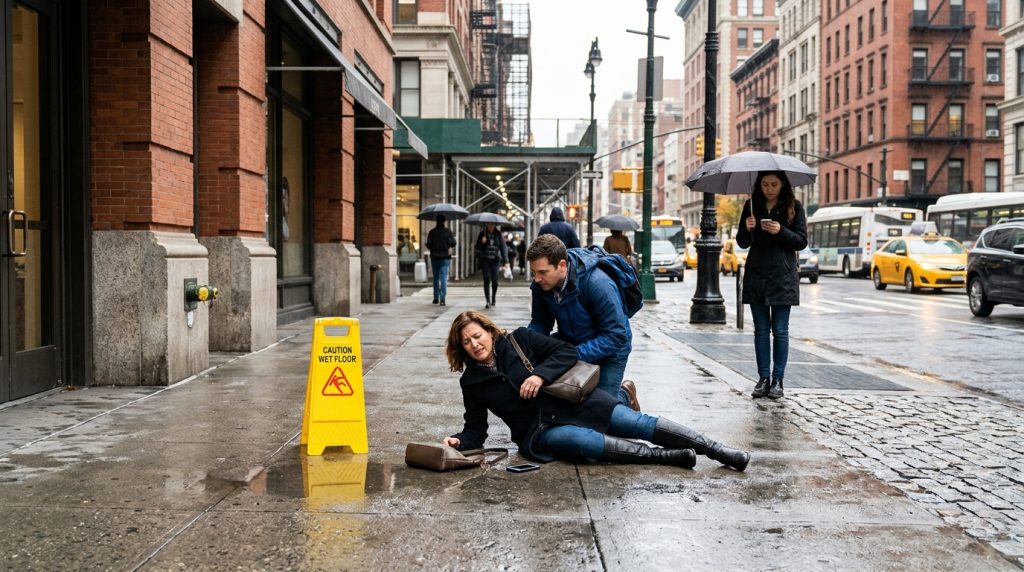
Slip and fall accidents are among the most common personal injury claims in New York City, Brooklyn, Queens, The Bronx, Staten Island, and surrounding areas like Nassau County and Suffolk County. While these incidents may seem straightforward, proving liability in a slip and fall case requires a thorough understanding of premises liability law and the specific negligence standards that apply in New York. At Tini Law, P.C., we help injured victims navigate these complex claims to secure the compensation they deserve.
Understanding Premises Liability in New York
Premises liability forms the legal foundation for slip and fall personal injury cases. Property owners and occupiers have a legal duty to maintain their premises in a reasonably safe condition. When they fail to do so and someone is injured as a result, they may be held liable for damages.
In New York, premises liability law distinguishes between different categories of visitors: invitees, licensees, and trespassers. This classification affects the duty of care owed by the property owner. Invitees—such as customers in a store or tenants in an apartment building—receive the highest level of protection under the law.
The Four Essential Elements of Proving Slip and Fall Liability
1. Establishing Duty of Care
The first step in proving personal injury liability is establishing that the property owner owed you a duty of care. Property owners in Manhattan, Brooklyn, Queens, The Bronx, and Staten Island must maintain their premises in a reasonably safe condition. This includes regular inspections, prompt removal of hazards, and adequate warnings about known dangers.
2. Demonstrating Breach of Duty
Once duty is established, you must prove the property owner breached that duty. This might involve showing they failed to clean up a spill, neglected to repair a cracked sidewalk, or didn’t salt icy walkways during winter months. Documentation is critical—photos, maintenance records, and witness statements all support your claim.
3. Causation: Connecting the Breach to Your Injury
You must establish a direct link between the property owner’s negligence and your slip and fall accident. This requires medical evidence showing your injuries resulted from the fall, not from a pre-existing condition. Expert testimony may be necessary to demonstrate how the hazardous condition caused your specific injuries.
4. Proving Damages
Finally, you must quantify your losses. Damages in slip and fall cases include medical expenses, lost wages, pain and suffering, and in serious cases, permanent disability. Thorough documentation of all expenses and ongoing treatment is essential to maximize your recovery.
Common Challenges in NYC Slip and Fall Cases
Proving liability in New York’s urban environment presents unique challenges. Property owners may argue that the hazardous condition was obvious and you should have been more careful. They might claim the dangerous condition was temporary and they had no notice of it.
Additionally, New York’s “reasonable care” standard requires property owners to conduct regular inspections. If you can demonstrate they failed to do so—or that their inspection procedures were inadequate—this strengthens your personal injury claim significantly. This distinction matters whether your accident occurred on a commercial property in Manhattan, a residential building in Brooklyn, or along a sidewalk in Queens.
Notice and Foreseeability
A critical factor in slip and fall liability is whether the property owner had actual or constructive notice of the hazard. Actual notice means they directly knew about the danger. Constructive notice means they should have known through reasonable inspection procedures.
The longer a hazardous condition existed, the stronger the inference that the property owner should have discovered it. If a puddle remained on a store floor for hours without being cleaned or marked with a warning sign, the property owner likely had constructive notice. The same applies to ice accumulation on walkways in Nassau County or Suffolk County during winter months.
Documentation and Evidence
Successful slip and fall personal injury cases depend on comprehensive evidence collection. Immediately after your accident, obtain contact information from witnesses. Report the incident to the property owner or manager and request a written incident report. Take photographs of the hazardous condition, your injuries, and the surrounding area.
Preserve all medical records and receipts related to your treatment. Keep a detailed journal documenting your pain, limitations, and recovery progress. This evidence is invaluable when negotiating with insurance companies or presenting your case to a jury.
Why Professional Legal Representation Matters
Personal injury claims involving slip and fall accidents require expertise in premises liability law. Property owners and their insurance carriers have experienced defense attorneys working to minimize their liability. Having a skilled personal injury lawyer from Tini Law, P.C. levels the playing field.
Our team understands the nuances of New York law and how courts in Manhattan, Brooklyn, Queens, The Bronx, Staten Island, Nassau County, and Suffolk County approach slip and fall cases. We gather evidence, retain expert witnesses when necessary, and negotiate aggressively on your behalf.
For more information about how we approach personal injury cases, check out our FAQ Videos where we address common questions about slip and fall liability.
Taking Action After Your Slip and Fall
If you’ve suffered injuries from a slip and fall accident in New York, don’t delay seeking legal counsel. New York law imposes strict time limits—typically three years from the date of injury—for filing a personal injury lawsuit. The sooner you contact an attorney, the sooner we can begin investigating your claim and gathering crucial evidence.
Contact Tini Law, P.C. today for a free consultation about your slip and fall personal injury case. We serve clients throughout Manhattan, Brooklyn, Queens, The Bronx, Staten Island, Nassau County, and Suffolk County. Let our experienced attorneys help you prove liability and recover the compensation you deserve.