Slip and Fall Accidents in NYC: Proving Liability in Personal Injury Cases
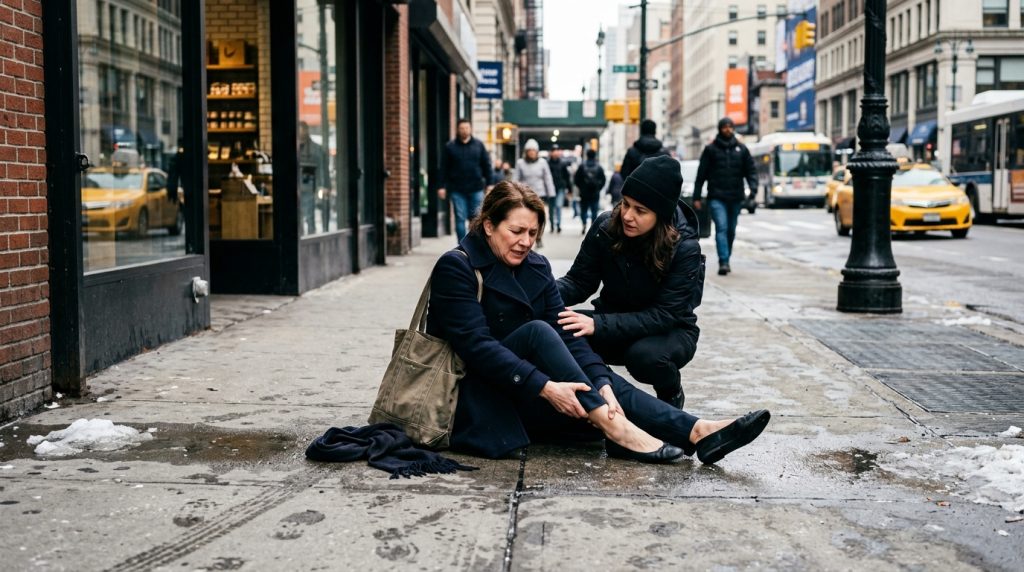
Slip and fall accidents represent one of the most common types of personal injury claims in New York City. From icy sidewalks in Manhattan to poorly maintained stairwells in Brooklyn, these incidents can result in serious injuries with lasting consequences. Understanding how to establish liability is crucial for victims seeking compensation for their injuries.
Understanding Premises Liability Law in New York
In New York, slip and fall cases fall under premises liability law, which holds property owners and occupiers responsible for maintaining reasonably safe conditions. Whether you’ve been injured in Queens, The Bronx, Staten Island, Nassau County, or Suffolk County, the fundamental legal principles remain consistent: property owners have a duty to exercise reasonable care in maintaining their premises and protecting lawful visitors from foreseeable harm.
New York follows a comparative negligence standard, meaning that even if you bear some responsibility for your accident, you may still recover damages proportionate to the defendant’s fault. This makes proper documentation and legal representation essential from the outset of your case.
Key Elements for Proving Liability
1. Establishing Duty of Care
The first element in any slip and fall case is demonstrating that the property owner owed you a duty of care. In New York, this duty varies based on your status as a visitor. Invitees (such as customers in stores) are owed the highest duty of care, while licensees (social guests) receive a slightly lower standard of protection. Property owners must regularly inspect their premises and address hazardous conditions that could reasonably cause injury.
2. Proving Notice of the Dangerous Condition
Perhaps the most challenging aspect of slip and fall litigation is establishing that the property owner had actual or constructive notice of the hazardous condition. Actual notice means the owner knew about the danger, while constructive notice means the condition existed long enough that a reasonable property owner should have discovered and remedied it through proper maintenance protocols.
In commercial settings throughout Manhattan and Brooklyn, surveillance footage can be invaluable in demonstrating how long a hazard existed before your accident. Maintenance logs, inspection records, and witness testimony also play critical roles in establishing notice.
3. Demonstrating Causation
You must prove that the dangerous condition directly caused your injuries. Medical documentation linking your injuries to the accident is essential. Seek immediate medical attention following any slip and fall incident, even if injuries seem minor initially. Delayed medical treatment can undermine your claim’s credibility.
Common Hazardous Conditions in NYC
New York City’s unique urban environment creates specific slip and fall risks:
- Winter weather hazards: Ice and snow accumulation on sidewalks, particularly following the city’s frequent winter storms
- Structural defects: Cracked sidewalks, uneven pavement, and deteriorating stairs in older buildings
- Poor maintenance: Wet floors without warning signs, inadequate lighting in stairwells, and debris in walkways
- Construction zones: Improperly secured work sites create significant hazards (learn more about construction law implications)
Building Your Case: Critical Steps
Immediately following a slip and fall accident, take these essential steps:
Document everything. Photograph the hazardous condition from multiple angles, including wide shots showing the surrounding area. Capture any warning signs (or their absence), lighting conditions, and weather if applicable.
Obtain witness information. Bystanders who observed your fall or the dangerous condition can provide crucial corroborating testimony.
Report the incident. File an accident report with the property owner or manager immediately. Request a copy for your records.
Preserve evidence. Keep the clothing and footwear you wore during the accident. These items may become evidence if liability is disputed.
Special Considerations in New York
New York’s statute of limitations for personal injury cases generally allows three years from the accident date to file a lawsuit. However, claims against municipal entities (such as New York City for sidewalk defects) require filing a notice of claim within 90 days, making immediate legal consultation imperative.
Additionally, property owners may raise various defenses, including claiming the condition was “open and obvious” or that you were distracted or wearing inappropriate footwear. These defenses don’t automatically bar recovery but can affect your compensation under comparative negligence principles.
In some cases, slip and fall incidents may intersect with other legal areas. For instance, accidents involving international visitors may raise international law questions, while injuries at commercial properties could involve criminal law issues if negligence rises to criminal levels. Financial hardships from serious injuries sometimes lead victims to explore bankruptcy law options.
Contact Tini Law, P.C. for Experienced Representation
If you’ve suffered injuries in a slip and fall accident anywhere in Manhattan, Brooklyn, Queens, The Bronx, Staten Island, Nassau County, or Suffolk County, the experienced personal injury attorneys at Tini Law, P.C. can evaluate your case and fight for the compensation you deserve. We understand the complexities of New York premises liability law and have successfully represented countless slip and fall victims.
Don’t let insurance companies minimize your claim. Contact Tini Law, P.C. today for a comprehensive case evaluation. Visit our FAQ videos for answers to common personal injury questions, or call us to schedule your consultation. Time is critical in building a strong case—reach out now to protect your rights.